When people step into the world of trading—whether in stocks, commodities, or derivatives—the most commonly recognized cost is brokerage. Brokerage is the fee charged by a broker for executing buy and sell orders on behalf of the client. While many traders are aware of this expense, it is only one piece of the overall cost structure. In reality, every trade involves multiple charges that can significantly impact net returns if not properly understood.
This blog aims to shed light on the various charges involved in trading so that clients can make more informed financial decisions.
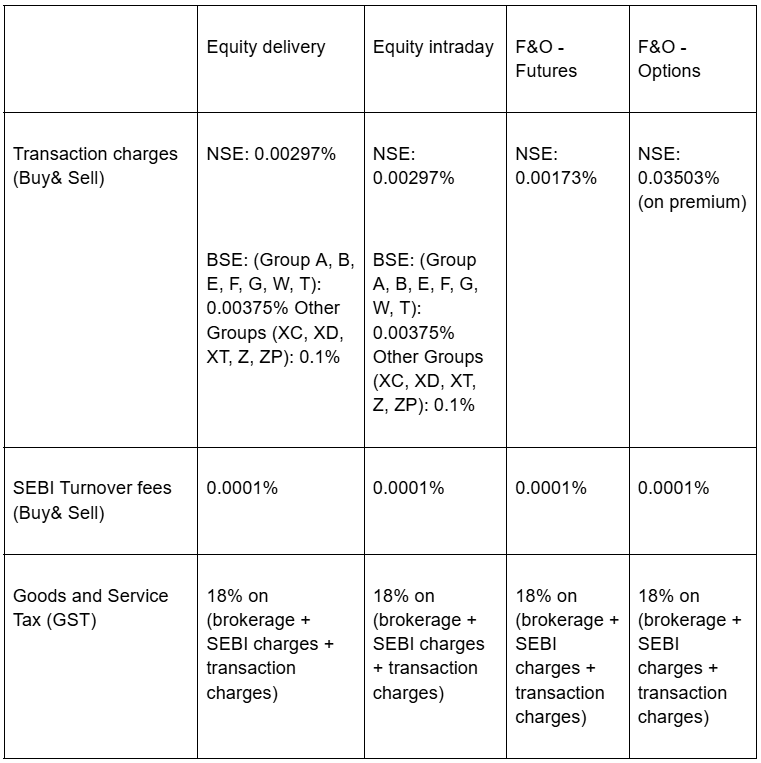
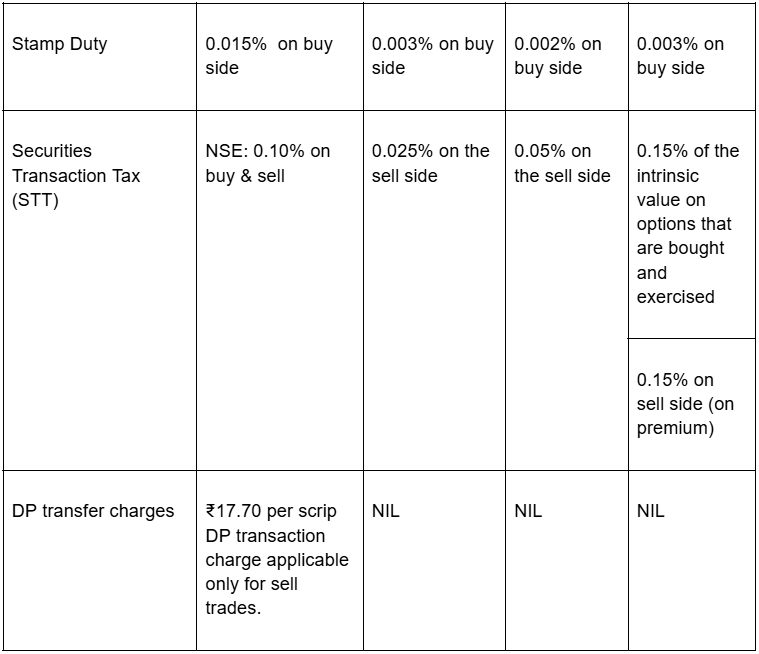
*charges with effect from 01/04/2026
1. Brokerage Charges
Brokerage is the fee levied by brokers for facilitating trades. It can either be a flat fee per transaction or a percentage of the trade value. With the rise of discount brokers, brokerage costs have reduced considerably, but they still remain a key expense.
2. Securities Transaction Tax (STT)
STT is a government-imposed tax applicable on the purchase and sale of securities listed on stock exchanges. The rate varies depending on the type of trade (equity delivery, intraday, or derivatives) and is mandatory for all traders.
3. Exchange Transaction Charges
These charges are levied by stock exchanges for providing the trading platform and infrastructure. Though relatively small, they apply to every trade and add up over time, especially for frequent traders.
4. GST (Goods and Services Tax)
GST is applied to brokerage and exchange transaction charges. Currently, it is charged at a standard rate, increasing the overall cost of trading.
5. SEBI Charges
The Securities and Exchange Board imposes nominal fees on trades to regulate market activities. These charges are minimal but still form part of the total expense.
6. Stamp Duty
Stamp duty is a state government tax applied to the purchase side of a transaction. The rates differ slightly from state to state but are standardized for most financial instruments.
7. DP (Depository Participant) Charges
DP charges are applicable when you sell shares from your demat account. This fee is charged by the depository participant (such as banks or brokers) for handling the transaction.
Why These Charges Matter
While each of these charges may seem small individually, collectively they can reduce overall profitability—especially for active traders who execute multiple trades daily. Ignoring these costs may lead to an overestimation of returns.
Final Thoughts
Understanding all the charges involved in trading is essential for effective financial planning. Brokerage might be the most visible cost, but it is far from the only one. By being aware of additional charges like taxes, transaction fees, and regulatory costs, traders can better calculate their real profits and optimize their trading strategies.
In trading, knowledge is not just power—it’s profit.